
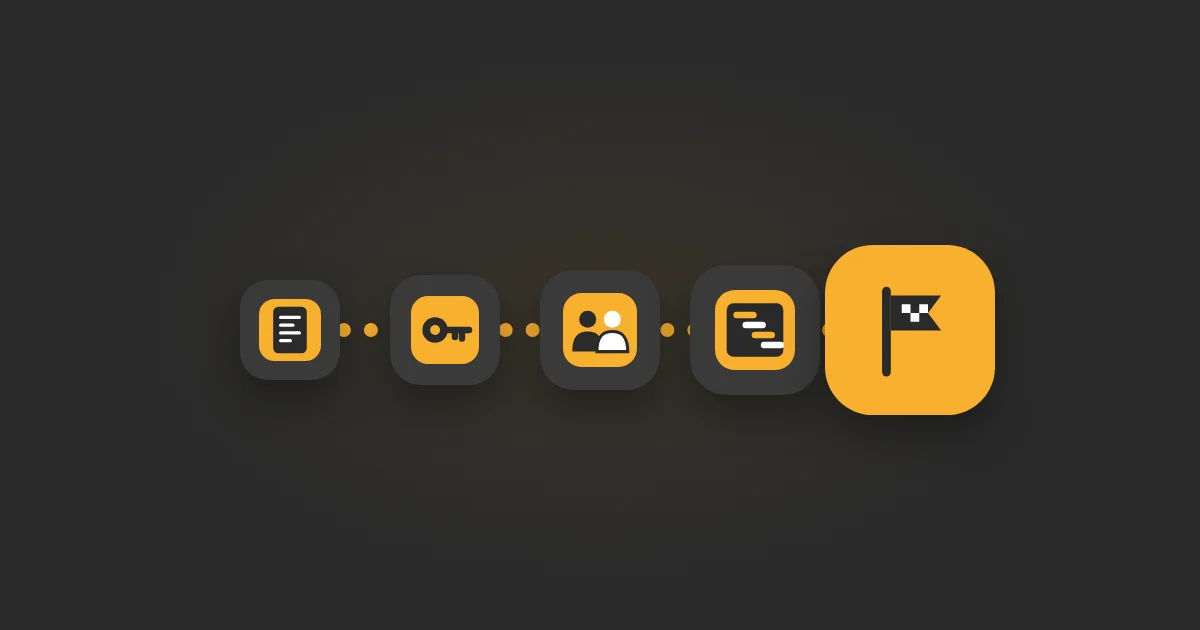
The first few weeks in a new job set the tone for everything that follows. When onboarding is messy, people spend their energy chasing logins and guessing what is expected. When it is clear, they can focus on learning and doing good work.
As a remote, international team, we cannot rely on someone walking a new hire around the office. So we built an onboarding process that is organized, written down and the same for everyone. Here is how it works, using the example of a recent Affiliate Manager hire.
Before day 1: the paperwork is done
Onboarding starts before a new team member logs in for the first time.
By day 1, the contract is signed and the person’s HR record is set up. Nobody should start a new role wondering whether their paperwork is in order. Getting this done early means the first day is about the work and the team, not forms.
For our Affiliate Manager hire, the contract and HR record were completed in the days before the start date, so the first morning could begin with introductions and access.
Day 1: access to everything that matters
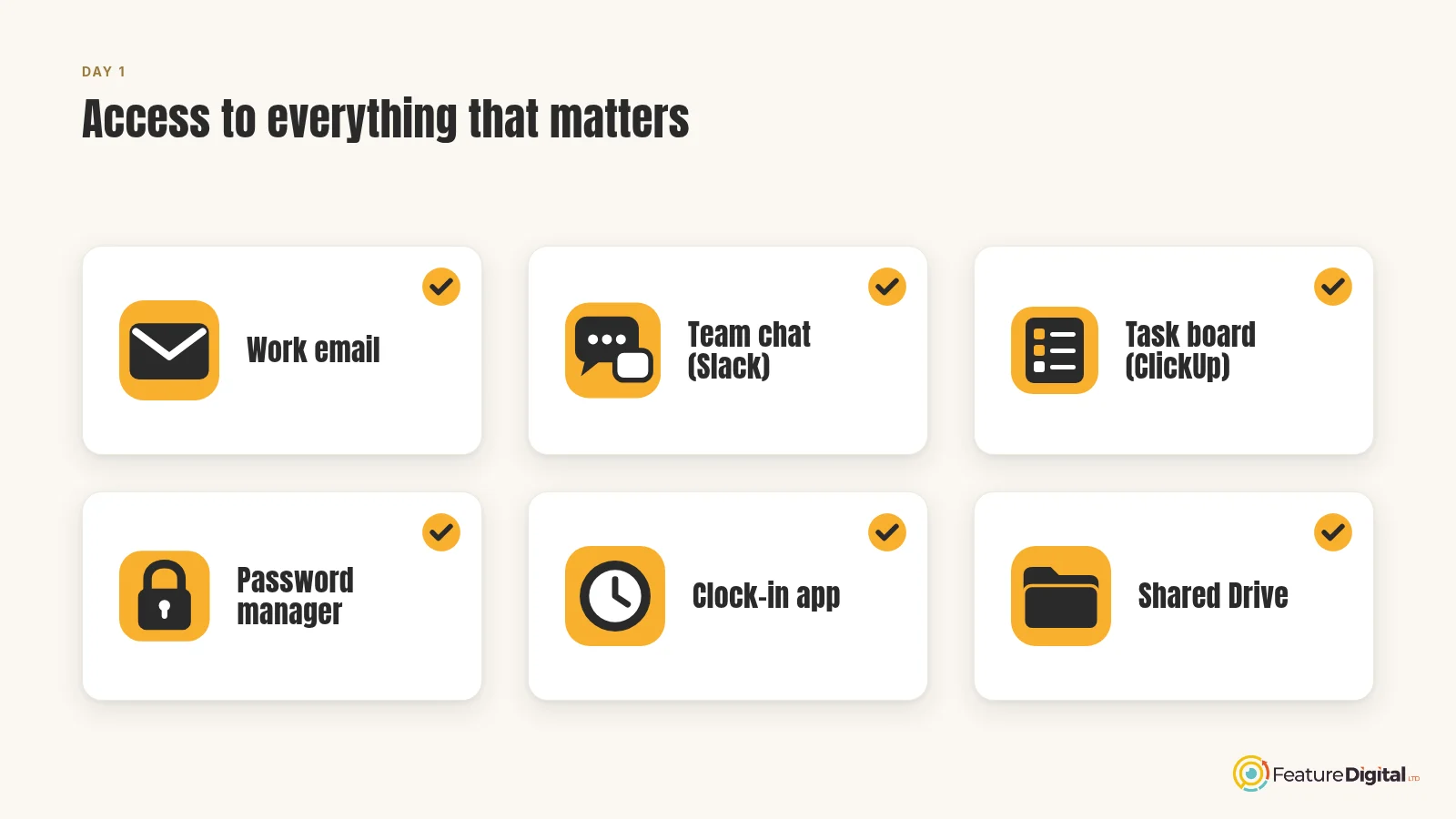
On day 1, our new team members get access to the tools they will use every day:
- Work email, so they can communicate with the team and partners.
- Slack, where the team talks, shares updates and asks questions.
- ClickUp, where tasks, plans and projects live.
- A password manager, so access to shared tools is secure and simple.
- Our clock-in app, used to track working hours.
- Shared Google Drive folders, with the documents, guides and templates relevant to their role.
Setting this up in advance means a new hire can start exploring and contributing on the very first day. It also means fewer awkward “who do I ask for this?” moments.
Two mentors per hire
Every new team member gets two mentors.
Usually, one mentor focuses on the role itself: the tasks, tools and standards of the work. The other helps with the bigger picture: how the team operates, who does what, and how to get things done across departments.
Having two mentors means there is always someone to ask, even across time zones. It also gives the new hire two different perspectives on the company, which helps them find their feet faster.
Our Affiliate Manager hire had one mentor from the affiliate side of the business and one from the wider operations team. Questions about partners and deals went to one; questions about processes and tools went to the other.
A 4-week Gantt work plan
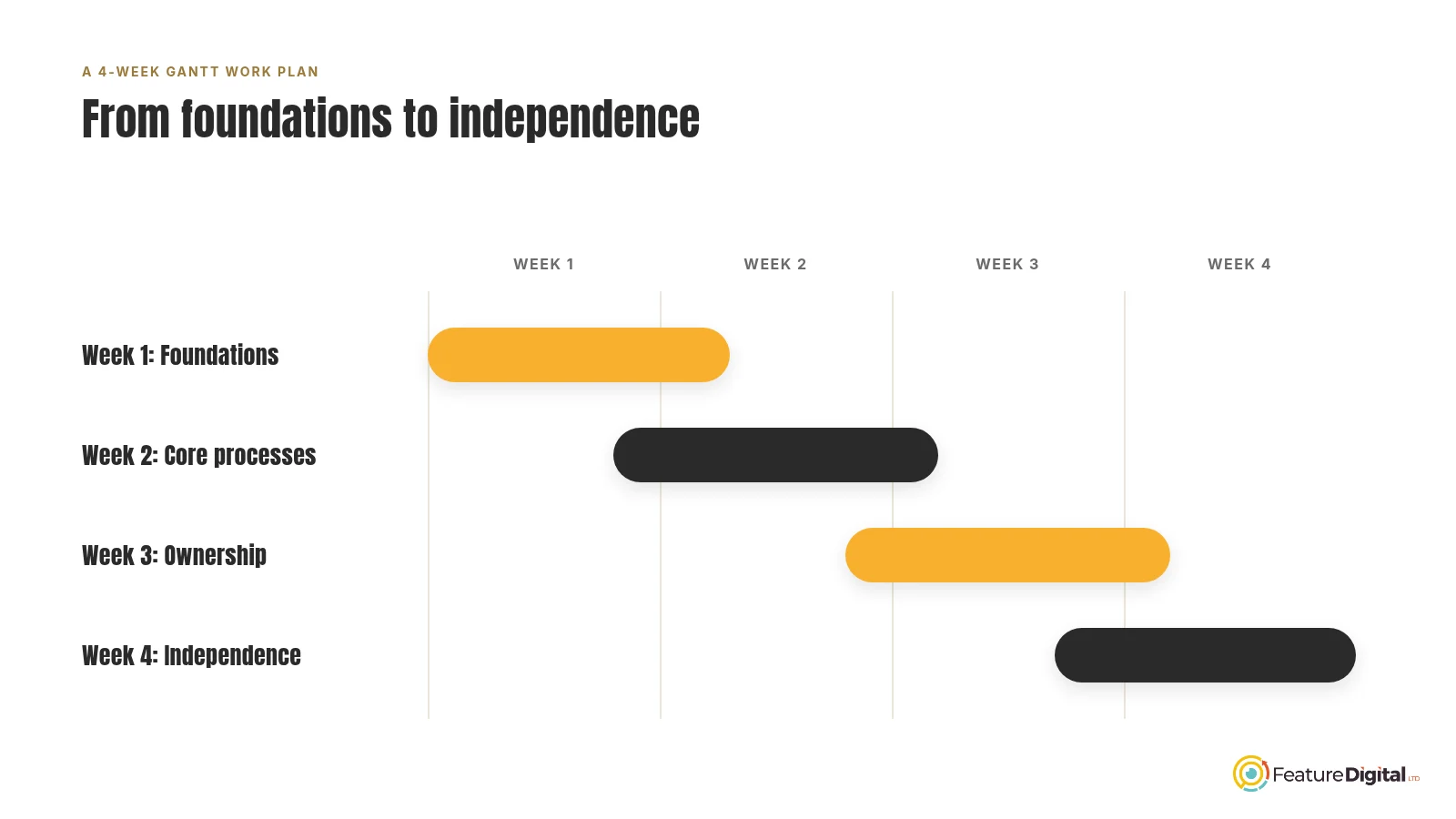
Before day 1, we build a 4-week work plan in ClickUp, laid out as a Gantt chart. Each week has a theme and a set of tasks, starting with foundations and building toward independence.
A typical plan moves like this:
- Week 1: foundations. Learning the tools, reading key documents, meeting the team, and handling first small tasks with support.
- Week 2: core processes. Working hands-on with the main systems and workflows of the role.
- Week 3: taking ownership. Leading pieces of real work, with mentors reviewing.
- Week 4: full independence. Running the role day to day, with mentors available as needed.
For our Affiliate Manager, the weekly lists followed exactly this pattern, moving from platform training in week 1 to running partner work independently by week 4. The Gantt view made it easy for everyone to see what was coming and what was on track.
Daily progress updates in Slack
Every day, new team members post a short written update in their team’s Slack channel. What did they work on? What did they finish? Where are they stuck?
These updates are simple, but they do a lot. Mentors can spot problems early. The team gets to know the new person’s work. And the new hire builds a habit of clear, written communication, which is essential in a remote team.
The week-1 check-in
At the end of the first week, each new hire has a check-in with their mentor. It is an honest conversation about how the week went: what is clear, what is confusing, what needs adjusting in the plan.
If something is not working, we change it. The 4-week plan is a guide, not a cage.
Why this matters for clients too
A well-onboarded team member reaches full speed sooner and makes fewer avoidable mistakes. For clients, that means a smoother handover when a new person joins their account, consistent standards across the team, and work that is documented and visible in our task pipeline.
Work with us
The way we onboard our own people is the way we run client work: clear plans, written updates, named owners and nothing left to memory. If that is the kind of partner you want for SEO, link building or PR, let’s talk.